The Win-Win-Win Funding Initiative that Benefits Visitors, Locals, and Communities
 By Visit Jackson Hole Board
Harnessing event spending: how communities benefit after the stage lights go out
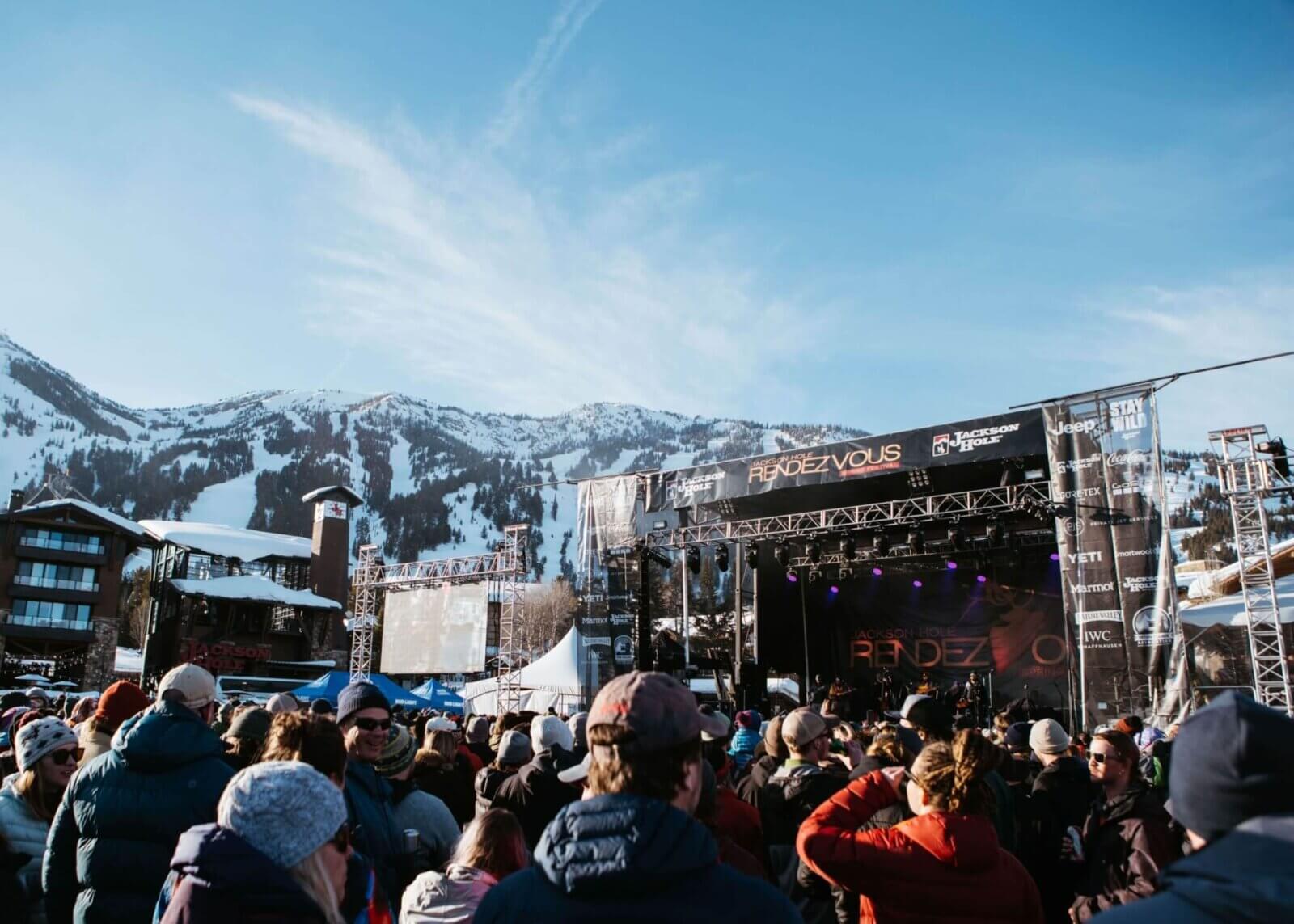
At 10 p.m. on April 4, 2025, five thousand people dispersed from the Jackson Hole Rendezvous Music Festival as the stage lights snapped off. Some visitors stumbled into nearby bars, while others caught Ubers back to their hotels. Some locals, also relishing the high vibes of their hometown, visited their favorite lesser-known dives, while others headed home to get ready for first tram the next morning with visiting friends. What these festivalgoers didn’t realize was that their collective impact on the mountain town was only just beginning.
The money spent on lodging that weekend was estimated at $1.2 million. Revenue at restaurants, shops, and ski resorts provided a critical boost before many seasonal businesses closed for the shoulder season, while income earned through rideshares and tips helped hospitality workers bridge the gap during a time when many face reduced hours or temporary layoffs.
Beyond the economics, the world-class acts that graced the Rendezvous stage created a true end-of-season celebration for locals, one that would typically taper off quietly (and certainly not with a million dollar bang) in towns of comparable size.
The Jackson Hole Rendezvous is just one example in one tourism-dependent community of how events can positively shape a place. But the data, and the lived experience, make clear why communities across the country are choosing to reinvest lodging tax dollars into local events: because they deliver meaningful benefits to the visitor experience, the local experience, and the community's economy.
Enhancing the Visitor Experience
In Cheyenne, it’s Frontier Days. In Austin, it’s Austin City Limits. In Tennessee, it’s Bonnaroo. In Boston, it’s the Boston Marathon.
Events give visitors a reason to come, and a reason to come back. These experiences turn a vacation into a memory and a place into a community visitors feel connected to.
Great events are representative of a destination’s people, and can proudly showcase its history and culture in a weekend, a day, or even a few hours. By supporting local events and programming, lodging tax dollars introduce visitors to local history, arts, outdoor recreation, and the individuals who make up a place. For many visitors, Cheyenne Frontier Days is a first look into the long-standing traditions of western heritage and the hard-working mindset of a still-thriving cowboy culture. The Boston Marathon is a powerful display of the resilience and strength that built a city, and Austin City Limits showcases an innovative mindset and creative energy.
Events sponsored by the Jackson Hole Travel & Tourism Board through lodging tax funds offer things to do for visitors that represent ski culture, western heritage, and strong identity as a national park gateway community. The Teton Powwow, for example, takes place each year in May. The weekend-long celebration offers a colorful experience in an often gray season. But more importantly, the Powwow shares Indigenous stories and traditions with visitors and locals alike, an opportunity for attendees of all backgrounds to glimpse different perspectives and approach cultural differences with greater understanding.
Expanding Local Offerings
Towns the size of Jackson Hole don’t often attract talent the size of The Head and the Heart, The Avett Brothers, and Ryan Bingham. But all of these artists have performed on stages under the Tetons. Thanks to lodging tax funding, Jackson is able to punch above its weight class when it comes to attracting world-class talent and producing compelling celebrations and festivals.
Perhaps the people who benefit most from this funding initiative are locals. When lodging tax dollars are intentionally allocated to events, residents gain access to a full events calendar that represents the interests of the entire community. They enjoy moments that celebrate local traditions, amplify diverse voices, and create spaces where residents and visitors come together on equal footing.
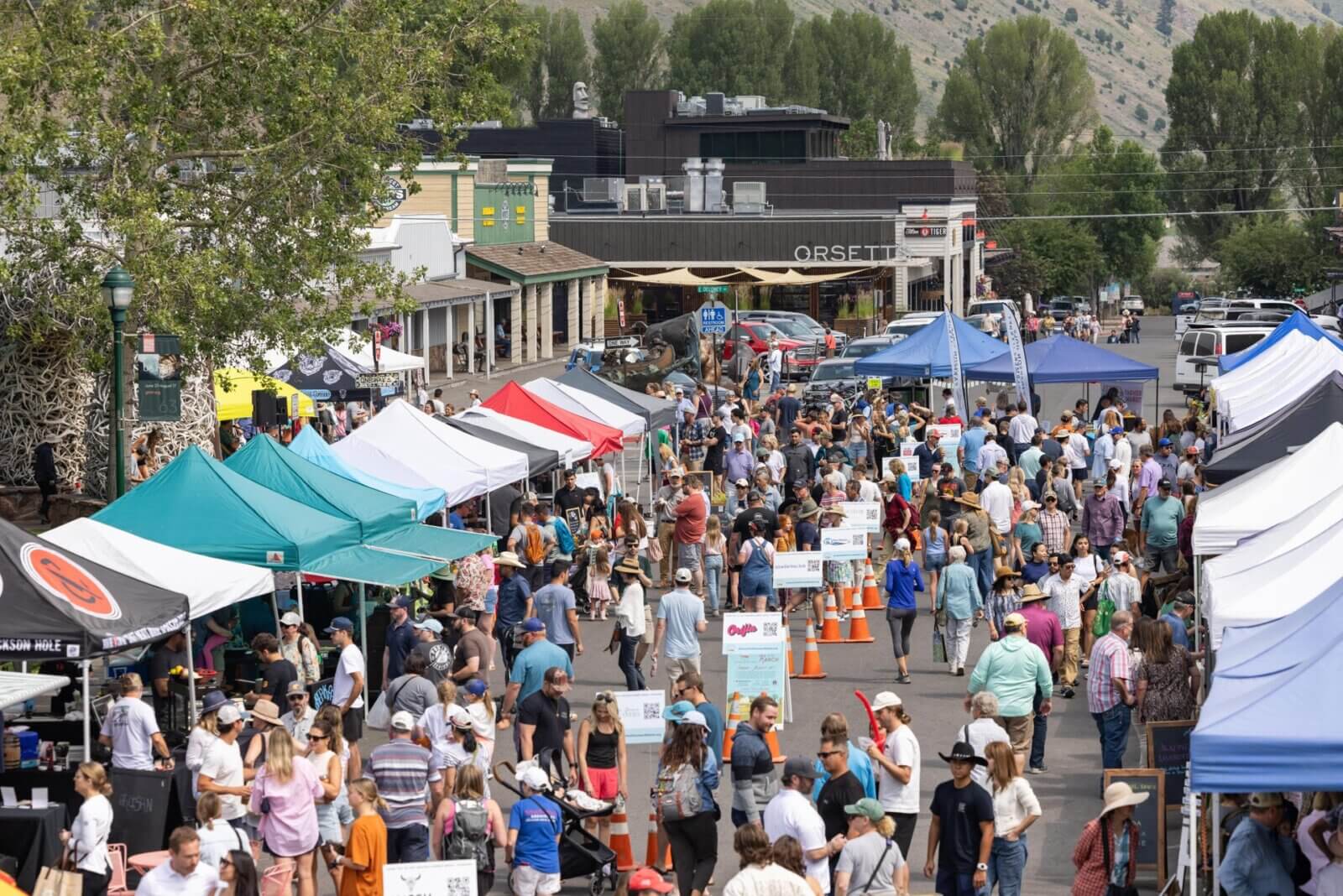
In Jackson Hole, visitor-paid lodging tax supports the World Championship Snowmobile Hill Climb, the Pedigree Stage Stop Dog Sled Race, the Jackson Hole International Film Festival, Jackson Hole Food & Wine, and Snake River Fest. But it also supports much smaller initiatives, like local art exhibits and craft fairs, nonprofit fundraisers, and outdoor recreation training. It’s part of the reason local families can participate in regional ski and snowboard races, professionals can join thought-leadership gatherings, and residents can access fresh fruits and vegetables through local farmers markets.


Benefitting the Economy
In October 2025, Teton County Search & Rescue brought the International Commission for Alpine Rescue (ICAR) to the United States for just the second time since the organization’s founding in 1948. Jackson Hole was chosen as the site of the 2025 Commission, and the destination welcomed 880 attendees from 25 countries.
That same October, Destimetrics reported a 13% increase in Jackson Hole occupancy over the dates the event took place. While this increase can’t be attributed solely to a single event, ICAR likely played a significant role in driving overnight stays across the community during a historically slower period. Attendees spent time at local ski resorts, dined at restaurants throughout the valley, purchased goods from local shops, and even attended a classic rodeo.
“They were able to see a different mountain town… got to know our terrain… and the feedback we received was very positive,” said Matt Carr, Teton County Sherriff and head of Teton County Search and Rescue. “We expect a lot of them to come back.”
Benefitting the Community
Each overnight stay generated by local events contributes 5% of lodging costs to visitor-paid taxes. This funding supports ambassador services, public infrastructure, and community safety, meaning more resources reinvested into Parks & Recreation, Search & Rescue, Pathways, and other essential services.
In the case of ICAR, even the event itself contributed to public services for the community. Hosting the event in Jackson allowed the entire Teton Country Search and Rescue team access to training, workshops, and even live scenario practice on their home mountains. “We can’t afford to send everyone every year,” said Carr, “it’s just not possible because of the cost. Hosting it here was a huge benefit for rescue teams, not only for us, but regionally as well.”
The Ultimate Win
Because lodging tax dollars come from visitors, reinvesting them locally ensures that tourism directly supports the place it depends on. It’s a circular model: visitors contribute to events, events enhance the visitor experience, and the resulting economic activity supports residents and public services.
At Visit Jackson Hole, this approach reflects a broader philosophy: tourism works best when it’s managed with intention, collaboration, and care. Funding events with lodging tax dollars isn’t just about drawing crowds; it’s about building a destination where visitors feel welcome, residents feel supported, and the community thrives year-round.
Event Funding
Visit Jackson Hole allocates public funding collected from the lodging tax to local events to promote, market, and produce events taking place in fall, winter, and spring. The lodging tax has allocated over $1 million each year to assist local events.
Explore